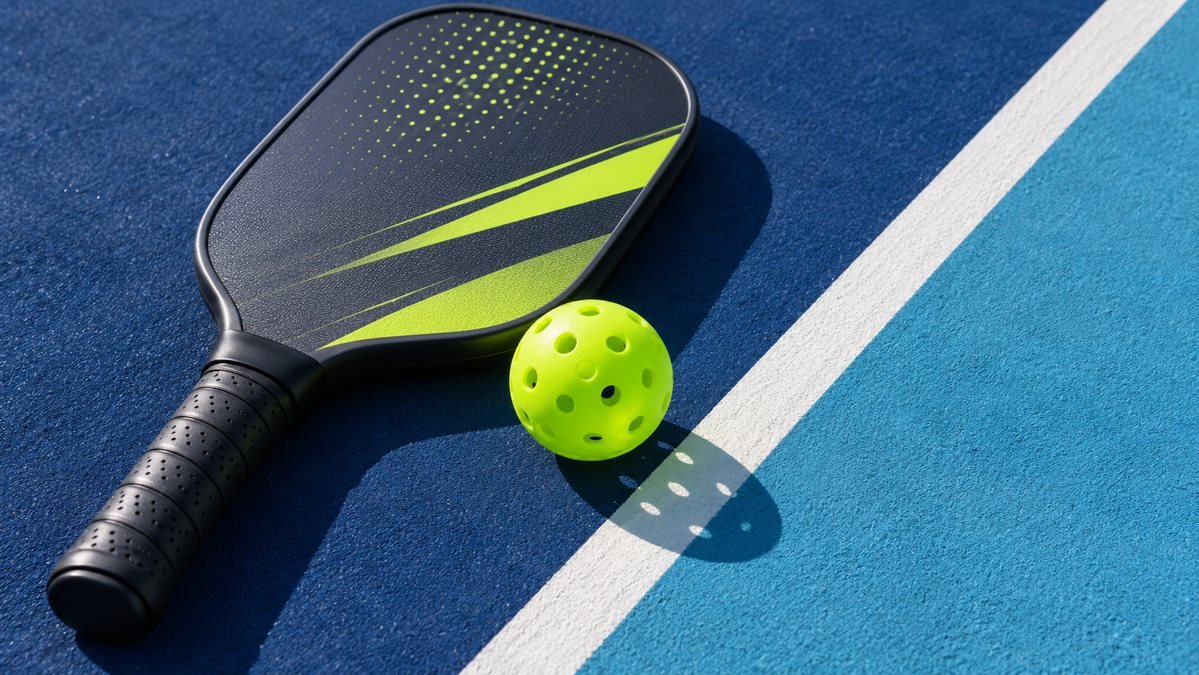
You volley from behind the kitchen line. The ball lands out of your opponent’s reach, but your next step carries you onto the line. Under the 2026 Global Pickleball Federation rules, that can still be your fault. To make the call, look at the bounce, your feet and what happened after you hit.
Rules checked November 29, 2026. This guide uses the 2026 USA Pickleball rulebook, Global Pickleball Federation edition, for standard play. For a league or tournament in the Philippines, check which edition and rules the organizer uses. The rulebook gives modified rules for wheelchair and adaptive standing play in Section 25.
First, did the ball bounce before you hit it?
The kitchen is the strip next to the net on each side of the court. In the rulebook it’s called the non-volley zone. The line seven feet from the net is part of that zone. A volley is a shot you hit before the ball bounces. When the ball has already bounced on your side during a rally, you can stand in the kitchen to return it, including with a foot on the line.
Picture a short ball dropping in front of you. If you wait for the bounce, you can step in and tap it back. If you rush in and hit it out of the air while your shoe is touching the line, that’s a fault. The same line gives two different results because the shots are different. The Philippine Pickleball Federation’s rules page also lists a volley from inside the zone as a fault.
If it was a volley, check where your feet started and landed
If you’ve been standing in the kitchen, get both feet onto the court fully outside the zone before you volley. Imagine stepping back with your right foot, then hitting while your left foot is still in the air after pushing off from the kitchen. You haven’t planted both feet outside yet, even if both shoes are over the right patch of court when you hit. Under Rule 11.A.3, that’s a fault.
Now imagine starting behind the line with both feet clear. You stretch for a volley and your forward motion takes you onto the line. That’s a fault even if the ball became dead before the step. A partner can be involved too. If that same motion carries you into your partner while they’re touching the kitchen, the contact counts against you. If you’ve regained your balance and control before walking into the zone, the later step is allowed.
Practice three calls with a partner
- Bounce, then step in. Have your partner feed a short ball. Let it bounce and return it with a foot inside the zone. Then repeat from the same spot, this time hitting the ball before the bounce. In a rally, the second contact would be a kitchen fault.
- Step back and plant both feet. Start inside the zone and step out. Have your partner wait until both feet have landed beyond the line before sending you a ball to volley. Say “both feet” as you set up so you remember what to check in a faster rally.
- Hold your balance after the volley. Take a gentle feed from just behind the line. Hit it and stay balanced. Ask your partner to watch the line at your feet during the shot and afterward. You can do this slowly without lunging.
When a point gets disputed, reconstruct it in the same order. Did it bounce before the hit? If it was a volley, were both feet back out after any previous step inside? Did the shot carry the player into the kitchen? Those details are easier to agree on than whether the shot looked like a smash.
For another example of why court position matters, see Saktrue’s guide to reading a libero’s overhead set in volleyball.
Leave a Reply