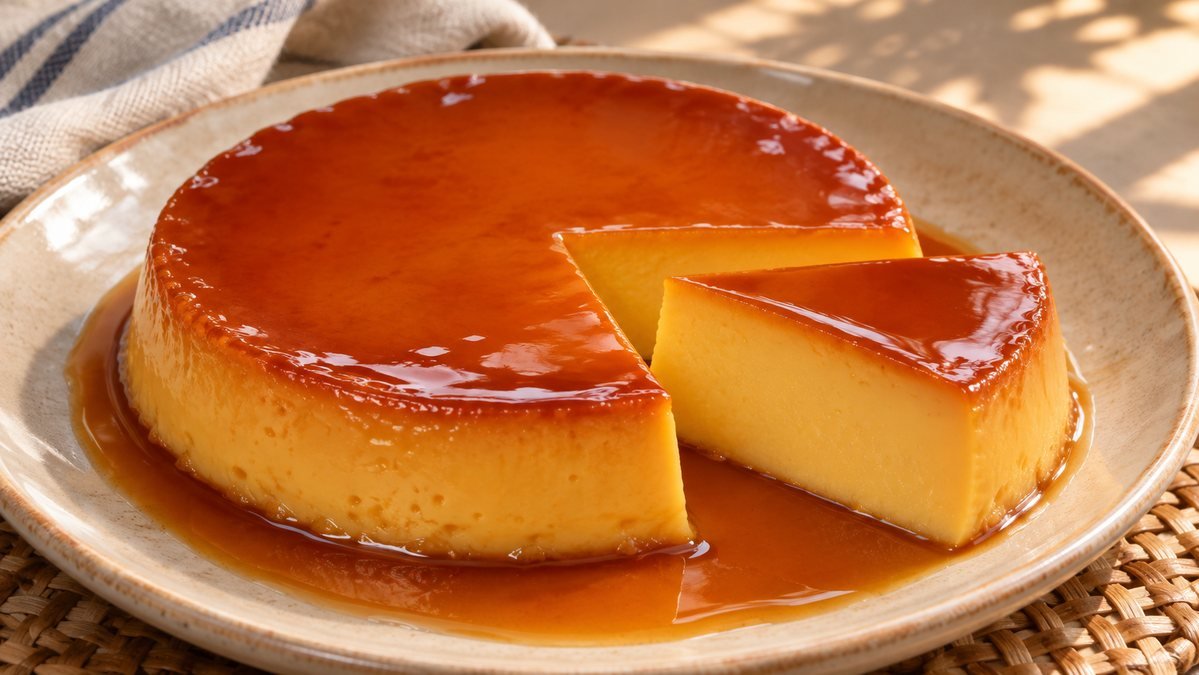
If your leche flan looks smooth from the top but turns spongy when you slice it, start by looking at the custard before it goes into the steamer. Was it already foamy in the bowl? Did you strain it? If it went into the llanera smooth, check how you cooked it. Those two points give you something more specific to change than swapping the milk or adding another egg.
Start with a yolk-only recipe
For your next batch, follow a recipe that starts with yolks, such as Panlasang Pinoy’s steamed leche flan or Kawaling Pinoy’s classic version. Use the milk and egg quantities from the same recipe. If you change from whole eggs to yolks at the same time that you change the amount of milk and the size of the pan, it becomes difficult to tell which change gave you the texture you wanted.
Separate the eggs over a small bowl, then transfer each yolk to the mixing bowl. That makes it easier to remove any stray white before you add the next one. Keep the caramel layer and the custard mixture separate until your llanera is ready to fill, following the sequence in your recipe.
Mix gently and strain before pouring
Stir the yolks and milk together slowly until you can no longer see streaks. If foam collects on top, pause and let it settle for a few minutes. Kawaling Pinoy recommends passing the mixture through a fine mesh sieve or cheesecloth to catch froth and any stray bits of egg white. Those steps give you a chance to deal with the air you can already see, while the custard is still liquid. See the recipe author’s mixing and straining notes.
Take a quick look at the surface after you pour it into the llanera. If you see a few bubbles, Kawaling Pinoy suggests a light tap on the counter and a short rest. That’s an easier first adjustment than changing the recipe on the spot. When you’re ready to steam, follow your recipe’s instructions for covering the llanera. Panlasang Pinoy covers the mold with foil before putting it in the steamer.
Use gentle heat and check the center
Kawaling Pinoy advises gentle heat when steaming because overheating or overcooking can leave the custard coarse. Panlasang Pinoy gives 30 to 35 minutes of steaming for its own recipe. Treat that range as a reference for that recipe and setup. If you switch from a shallow llanera to a deeper mold, the old timer setting may be a less useful guide. Check the center using the doneness cue in the recipe you’re following. Kawaling Pinoy checks for a toothpick that comes out clean. See the steamed method and the texture and doneness notes.
With an oven, you can follow a recipe written for a water bath. Kawaling Pinoy uses one to heat the custard gently. An oven water bath and a covered stovetop steamer are two different setups, so use the timing and instructions that go with the method you picked.
Change one step and compare the slices
Chill the flan as directed in your recipe before turning it out and slicing it. If you have two similar llaneras, use the same egg and milk ratios, mold depth and cooking method. If your first batch went in with a cap of foam, try gentler stirring and straining next time. If it went in smooth but came out coarse, keep the mixing steps and focus on a gentler cook. A quick note on the mold, cooking time and texture gives you a reference for the next batch.
Planning another dessert for the same table? Check how condensed milk and all-purpose cream work in buko salad before deciding what to buy.
Recipe sources checked November 29, 2026, Philippine time.
Leave a Reply